Wednesday, April 22, 2015

“Big Machines Float!” by Catherine Veitch

Age: 3-5 years
Genre: non-fiction picture book

Does your preschooler like vehicles? How about BIG vehicles? Part of the Heinemann “Read and Learn” collection, the Big Machines series uses real photographs to show some of the biggest vehicles on land, sea, and air. In Big Machines Float! the reader explores things that travel on water including ice breakers, cargo ships, galleons, and cruise ships. Each ship is rated on a scale of big, super, or mighty and is described in basic terms suitable for the young reader. My three-year-old loved seeing the variety of “big, big boats” featured in this book, and I’m sure we will enjoy exploring the other books in this series, including Big Machines Build!, Big Machines Drive! and Big Machines Ride Rails! Look for the Big Machines series at your local library or bookstore.

Bibliographic Information:
Veitch, Catherine. Big Machines Float! Chicago, IL: Heinemann Library, 2015.


Big Machines Float! on BarnesandNoble.com

Friday, March 27, 2015

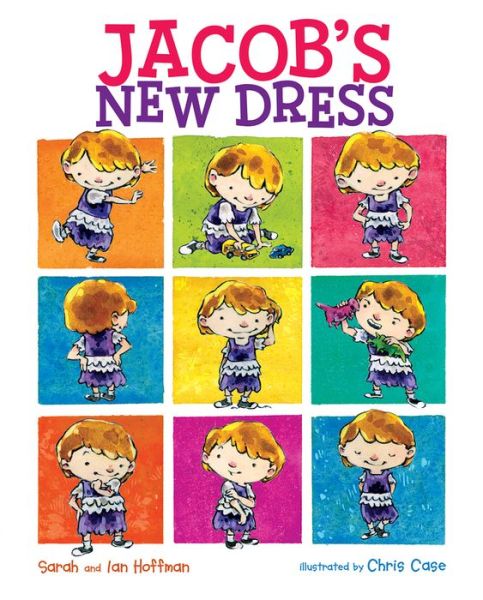
“Jacob’s New Dress” by Sarah & Ian Hoffman with illustrations by Chris Case

Age: 3-5 years
Genre: picture book

The title of this book caught my attention when I saw it on the shelf at the library. I used to teach 2-3 year olds, and the boys in my class loved wearing dresses for make believe time. I’m not sure how their parents felt about it, but it’s all part of exploring their world. When I saw Jacob’s New Dress, I thought, Ooo, a picture book about boys who like to dress like girls! So I read the story and found a unique and relevant tale that takes a nurturing and non-judgmental look at a boy who likes to wear dresses.

Jacob is a preschool boy who loves to play dress-up with his friends. Though he could dress up as anything, including the more traditional boy costumes of a dragon, firefighter, or cowboy, he chooses a “sparkly pink dress” and a crown. His classmate, Christopher, has a problem with this and asks Jacob, “Why do you always wear the girl clothes?”  Luckily for Jacob, he has an understanding teacher, Ms. Wilson, who steps in and says Jacob can use his imagination to dress up however he wants. When Jacob gets home, he talks to his mom and dad about wearing dresses. The next day Jacob creates a dress for himself out of a towel and belt, and his mother reluctantly lets him wear it to school. But Jacob gets teased again. When he tries to talk to his mom about it, he feels like he can’t breathe waiting to see what she will say. His mom tells him, “There are all sorts of ways to be a boy,” and then helps him make his own real dress to wear whenever he wants.

Jacob’s New Dress tackles the issue of gender nonconformity in a realistic way. The authors don’t shy away from the fact that Jacob gets teased for his choices, but they surround him with adults who are able to keep an open mind and be supportive. The authors of the book have their own gender-nonconforming son, Sam, and their expertise in the subject matter shines through and feels real. Jacob’s New Dress shares an important story that many children could probably relate to, whether they dress up sometimes just for fun or every day. This book would be well-suited to being read in a classroom setting where the teacher could talk to the children about the issues raised in it.

Bibliographic Information:
Hoffman, Sarah & Ian. Jacob’s New Dress. Chicago, IL: Albert Whitman & Company, 2014.


Saturday, November 1, 2014

“Toot Toot Beep Beep” by Emma Garcia

Age: 1-4
Genre: Fiction, Picture book

My two-and-a-half year old boy continues his obsession with cars, trucks, and all vehicles, so many books we read fall into that category. I recently brought home for him Toot Toot Beep Beep by Emma Garcia, and he immediately fell in love with it. This is a simple book with simple text and bright, colorful paint-and-collage illustrations. Each vehicle has two eyes on the front to help give him or her some character. The book features seven different vehicles, each of which makes his or her own sound. Whether it’s the jeep going “beep beep” or the van going “chugga chugga,” children will love hearing this book read aloud and repeating the sounds after you. In about a week, I was surprised to find my son could recite almost the whole book from memory. Now he loves “reading” it aloud to me. If your child is interested in cars and trucks, you should pick up Toot Toot Beep Beep and share it with him or her for a fun read.


Garcia, Emma. Toot Toot Beep Beep. New York: Boxer Books, 2008.

Sunday, September 21, 2014

“Madeline and the Old House in Paris” by John Bemelmans Marciano

Age: 3 and up
Genre: Picture book

I recently attended a wonderful yearly event, the Princeton Children’s Book Festival. This is a day when over 50 authors and illustrators come to Princeton, NJ and sit outside the library at tables with big stacks of their books just waiting to be signed for eager children (and adults). While maneuvering through the crowds, which seem to get bigger every year, a Madeline book caught my eye. I grew up reading about the French orphan and her many adventures, and I thought surely the author isn’t here. He can’t still be alive. Those books were old when I was young. But there was a gentleman sitting at the table in front of several Madeline books, so while he chatted with a child and parent, I picked a book up and flipped to the “about the author” portion on the back flap. Here I read that this man, John Bemelmans Marciano, is grandson to Madeline’s original creator, Ludwig Bemelmans, and “carries on the Madeline legacy.” So I purchased a copy of Madeline and the Old House in Paris and thought I’d see how it compared to the Madeline stories I knew and loved.

Marciano has used the familiar characters, including the titular Madeline, Miss Clavel, and neighbor boy Pepito. In this story, the head of the school where Madeline lives (“the old house in Paris” referred to in the title), Lord Cucuface, comes to visit and takes a telescope he finds in the attic. Later that night, awakened by a strange noise, Madeline leads her classmates back to the attic and finds a ghost. The ghost reveals himself to be Felix de Lamorte, and the telescope Lord Cucuface took belongs to him. He needs it back so he can witness a comet that only comes every 221 years. Madeline and Pepito devise a plan to scare Lord Cucuface and return Lamorte’s telescope to its rightful owner in time to see the comet. I enjoyed having a new Madeline adventure to read and was pleased with Marciano’s creation. His artwork is very similar to Bemelmans’, including some illustrations entirely in yellow, black, and white. He uses the same rhyming style in his text, and it reads well. Reading this book put a smile on my face as I recognized the rhythm and characters of my childhood. Though the story involves a ghost, he is not in the least bit scary, and I doubt that young children will be frightened by this book. Fans of Madeline should welcome this and the other new stories Marciano has lovingly created.


Bibliographic Information:
Marciano, John B. Madeline and the Old House in Paris. New York, NY: Viking, 2013.


Thursday, July 31, 2014

“My Bus” by Byron Barton

Age: 2-5 years
Genre: picture book

The newest book from author/illustrator Byron Barton is sure to delight fans of his previous transportation books, such as My Car, Airport, Trucks, Trains, etc. Using bright and colorful block illustrations that resemble cut paper (but which the book notes were actually done using Adobe Photoshop™), the text follows a bus trip with bus driver Joe. As Joe drives around town, he picks up dogs and cats at each bus stop, and then drops them off at a boat, train, and airplane to continue their journeys elsewhere. At the end of the day, one dog remains on the bus: Joe’s dog, which he takes home. Children will enjoy seeing the animals and various modes of transportation, and parents may appreciate that the book allows practice in basic counting, addition, and subtraction. My Bus is a great new edition to Barton’s repertoire and would fit well on any young child’s bookshelf.

Bibliographic Information:
Barton, Byron. My Bus.  New York, NY: Greenwillow Books, 2014.


Wednesday, July 9, 2014

“My No, No, No Day!” by Rebecca Patterson

Age: 2-5 years
Genre: picture book

This book came across my desk at the library on a day my two-year-old son was having a particularly hard time doing anything. He didn’t want to eat, or get dressed, or ride in the car… every parent has been there. My No, No, No Day! tells the story of Bella, a young girl who is having a bad day. She doesn’t want to eat the egg her mom made her for breakfast, doesn’t like her shoes and kicks them off, doesn’t want to ride in the grocery cart at the store, and on and on. All the while her patient mother and baby brother try to go on with their day without Bella’s bad temper catching up to them. At bedtime, however, Bella decides to let her mother read her a story, even though Bella doesn’t really want a story.  The story calms Bella down and she tells her mom, “Today was a very bad day, Mommy. Sorry.” Of course Mommy understands that some days are just like that, and the next day, Bella has a much better time.

I like that this story acknowledges Bella’s feelings and doesn’t just make her out to be “bad.” The incidents the author creates seem very believable, and the reader feels for Bella (and her family) as she tries to make it through a day when nothing seems to go her way. I’m not sure I believe that in the end Bella would apologize to her mom, but I would like to hope that actually happens sometimes. Parents and children alike should relate to My No, No, No Day! and reading it could open up a good conversation when a child is feeling grumpy.

Bibliographic Information:
Patterson, Rebecca. My No, No, No Day! New York, NY: Penguin Group, 2012.


“Mighty Dads” by Joan Holub with illustrations by James Dean

Age: 2-5 years
Genre: picture book

In this colorful and bright picture book, we see big “Daddy” trucks and little “child” trucks as they work together to build a city. The story is told using rhyme, and though the meter doesn’t always read smoothly, the text flows overall. Each truck makes its own sound or completes an action, such as the bulldozers that “roar, roar, roar” or the dump trucks that “fill, drive, dump.” It can be a little confusing for the reader since the sentences start with “They go…” which to me implies it is a sound they are making, but “roll,” “dump,” or “lift” are not sounds. I think it would have been better to stick to sounds for consistency in the book and not throw in actions as well, but maybe I am being picky. After we have watched all the trucks work, we see the Mighty Dads say they are proud of their little ones, a positive message to send to any child.

My two-year-old son, who loves trucks and construction equipment, really enjoys this book because of the variety of vehicles pictured. He wants to know what each one is called. He points to the Daddy and child trucks on each page, so he is also learning “big” and “little.” Mighty Dads is a great read-aloud for parents with truck-obsessed children.

Bibliographic Information:
Holub, Joan. Mighty Dads. New York, NY: Scholastic Press, 2014.


Monday, May 26, 2014

“Around the World” by Matt Phelan

Age: Middle Grade
Genre: Graphic novel; historical adventures

A friend purchased a copy of Around the World for me because she remembered how much I enjoyed another of Matt Phelan’s works, The Dust in the Barn. I am glad to say that I enjoyed Around the World just as much. It is actually three different stories told in one graphic novel. The stories follow Thomas Stevens (a cyclist or “wheelman”), Joshua Slocum (a mariner), and Nellie Bly (a news reporter) on their individual journeys around the world. Each trip was a real adventure and took place in the last two decades of the nineteenth century. Travel was very different in those days since people didn’t yet fly in airplanes. For example, to cross an ocean, you had to take a boat – a long and sometimes perilous mode of travel. If you were working against the clock, as was the case with Nellie Bly, waiting for boats to even leave harbor sometimes added not just hours but days to your travel. Stevens wasn’t going for any type of speed record during his trip around the world, but he was the first to do so on the newly-invented bicycle. Slocum sailed his way around the continents, struggling with the perils of the sea as well as loneliness. Phelan does an excellent job of showing what made each individual’s trip unique and exciting. He is a very talented illustrator and tries to make every panel meaningful for the story. I especially enjoy the expressions he gives his characters as they display a lot of emotion. This book was more light-hearted than The Dust in the Barn due to the different subject matter, and young readers should enjoy the adventures of the three people portrayed.

Bibliographic Information:

Phelan, Matt. Around the World. Somerville, MA: Candlewick Press, 2011.

Thursday, April 17, 2014

"The House of Hades" by Rick Riordan


Age: Middle Grade
Genre: Fiction, Fantasy

In the fifth installment of the Heroes of Olympus series, we find Percy and Annabeth making the deadly journey through Tartarus while their friends fight monsters across the Mediterranean Sea and surrounding lands.  Both teams are on their way to the doors of death at the House of Hades. The doors must be closed both above and below ground to slow the flow of monsters into the mortal world. While on their separate journeys, each one of the seven demigods (plus Nico) faces new challenges and must learn to use his or her powers in more advanced ways.

Though I enjoy reading this series, each successive book feels more and more overwritten. Part of the problem is the large cast of characters: besides the seven main demigods on the journey (who take turns narrating the book), there are two camps full of people, the gods (in both their Roman and Greek forms – which I will admit I can’t keep straight), and all the various monsters and spirits they encounter. No wonder the books keep getting longer. And do the heroes really need to encounter so many problems along the way? I feel like Riordan is just trying to cram in as much mythology as possible, whether it is necessary to advance the story or not. This bothers me. Also, the heroes seem to use the same tricks to defeat their enemies again and again and it is getting predictable. Such as when someone refuses to help them and they taunt him/her by saying he/she isn’t powerful enough to do what they need until hubris takes over and the God/demon/whatever does exactly what the heroes want. I mean really, is this trick going to work every time they try it? According to the author, it will. So though I read the entire book, I am hoping that the next book is a tighter story with fewer new characters to try to follow.

Riordan, Rick. The House of Hades. Disney Hyperion, 2013.

Friday, February 21, 2014

“Maple” by Lori Nichols

Age: Picture Book (2-5)
Genre: Fiction

Before a little girl named Maple was born (“When she was still a whisper”), her parents planted a maple tree in her honor. As Maple grows, so does her tree. She loves to play with her tree, or simply watch its leaves dance. But Maple sometimes wishes she had someone else to play with. One day she is surprised to find a new tree growing…and a new baby on the way! Maple is going to be a big sister! And she will share with her sibling the joys of trees.

When I stumbled across this book at the store this week, I read it and had to buy it.  I loved this story of the friendship between a girl and her tree. The pictures are cute and warm and green and show the joys of being outside. I especially like the illustrations of Maple lying under the tree, looking up through the green leaves. I thought the author was very creative to use the growing of a new tree as a symbol for an upcoming birth. This book takes the usual new sibling story and gives it a wonderful, leaf-twirling spin. Maple will make you smile and want to take her home with you, too.

Bibliographic Information:
Nichols, Lori. Maple.  New York, NY: Nancy Paulson Books, 2014.


Wednesday, February 5, 2014

“Dino Pets” by Lynn Plourde and illustrated by Gideon Kendall

Age: 2-5 years
Genre: picture book

I recently came across this book at the library and remembered using it in my classroom when I was a preschool teacher. I had used Dino Pets with one- and two-year-olds during our unit on dinosaurs, and they always enjoyed it. Dino Pets follows a young boy who takes home all different kinds of dinosaurs for pets, but none of them works out. He picks the biggest dino, the smallest, the longest, the scariest, but either they don’t fit in his house, they run away, or they frighten his family. He runs out of dinosaurs to get from the pet shop and is sad, but in the end, all the dinos come back to him because, “No one likes to sleep alone.” This is a cute story about trying to find just the right pet that adds in the clever turn of the pets being dinosaurs. I like that it shows an assortment of dinosaurs that are not often used in other books, and an author’s note at the back tells the name of each dinosaur featured in the book as well as some information about it. Kids may enjoy listening to the rhyme in Dino Pets and seeing the funny scenes when the dinosaurs interact with humans. Kendall’s bright and friendly illustrations really bring the story to life and don’t make the dinosaurs seem scary. This is a fun, imaginative, and educational book.

Bibliographic Information:
Plourde, Lynn. Dino Pets.  New York, NY: Dutton Children’s Books, 2007.

Tuesday, January 14, 2014

“The Ocean at the End of the Lane” by Neil Gaiman

Age: Adult
Genre: Fiction, Magical Realism/Fantasy

Have you forgotten incidents from your childhood? Of course. But what if you had traveled with a magical girl to a world beyond the one we know and accidently brought back a harmful spirit who tried to ruin your family? Surely this would stick in your memory. But when the narrator of The Ocean at the End of the Lane travels to the site of his childhood home as an adult, he has to grasp at memories of the little girl named Lettie Hemstock and the evil they faced together when he was only a boy of seven. During his visit home, he travels down the lane to the Hemstock farm and begins to chat with a woman he vaguely remembers. The longer he talks, the more memories come back to him of the thing that nested in his foot from the world beyond and took the form of a housekeeper and nanny calling herself Ursula Monkton. As the story unfolds from the perspective of the man as a young boy, the reader is taken through a strange world and asked to believe many things that lead to questions about the nature of reality, magic, and memory.

First of all, I recommend listening to this as an audio book because it is read by the author. Gaiman reads it like a true storyteller, giving it a flavor only the creator of this world can provide. When I began this book, I was unsure why it was classified as an adult book when the narrator is a seven-year-old boy.  Most books narrated by children are written for children. However, I believe the adult classification is mostly due to some adult themes in the book. If not for the sexual references (light as they are), it would likely be enjoyed by children. Perhaps not seven-year-olds, but it would fit into middle grade easily. The tone of the story is hard to describe. You could call it magical, but that would sound too happy. You could call it sinister or dark, but that would sound too harsh. It is somewhere in between. The characters are all well-formed, and the author makes sure we know who the villain is and hate her just as much as the main character does. His descriptions are so clear that you feel as if you are in the fields running from the carpet monster with the narrator. This book fits well into Gaiman’s other writings and will leave you with feelings of suspicion, wonder, and perhaps fear of the unknown.

Bibliographic Information:

Gaiman, Neil. The Ocean at the End of the Lane. New York: Harper Collins, 2013.

Sunday, December 29, 2013

“Tuck Me In!” by Dean Hacohen and Sherry Scharschmidt

Age: birth to 2 years old
Genre: picture book

This book starts with a simple line: “It’s time for bed. Who needs to be tucked in?” This is followed with a different animal on each page and a half-page blanket that the reader flips over the animal to tuck it in. The book ends with asking if the reader needs to be tucked in. There is not much to this book. There is no theme that unites the animals chosen unless it’s that they are mostly difficult to make up sounds for (What does the hedgehog say? How about the moose?). I like that it provides a variety of animals, and my son (who is 1.5 years old) seems to enjoy “tucking in” the animals. But overall, not too exciting of a book to read. No story, no characters, no anything, really. More of a game than a story.

Bibliographic Information:
Hacohen, Dean & Sherry Scharschmidt. Tuck Me In!  Somerville, MA: Candlewick Press, 2010.


Tuck Me In! on BarnesandNoble.com

“You Are My Baby: Farm” by Lorena Siminovich

Age: birth to 2 years old
Genre: board book

This book is advertised as “two books in one” because it has a little book inside a bigger book. (It’s a little hard to explain, so see the picture here). The illustrations are very cute and cover many of the usual farm animals, so the reader gets an opportunity to teach animal noises as well as names. Though the book is designed to let the adult turn the big page and the child turn the small page, my son (who is 1.5 years old) turns the little pages before I’m done with the big one, so the animals don’t usually match up like they are supposed to. The only way for us to enjoy it “correctly” is if I do all the page turning. We enjoy reading the book together either way. My main complaint with this book is its shoddy construction. Because of the little/big book format, the binding is compromised. I have used packing tape up and down the spine, but it’s still falling apart. We haven’t even had it for more than a few months, so this is just poor quality. Board books need to hold up to young hands and vigorous page turning, and this is the first one we’ve had a major problem with. I recommend getting a different farm book instead.

Bibliographic Information:
Siminovich, Lorean. You Are My Baby: Farm.  San Francisco, CA: Chronicle Books, 2013.


“City Cat, Country Cat” by Patricia Cleveland-Peck with illustrations by Gilly Marklew

Here's my review of another cat book that caught my eye. Remember ratings are out of a possible 4 paws.

“City Cat, Country Cat” by Patricia Cleveland-Peck with illustrations by Gilly Marklew


Age: 3 and up

Genre: Fiction, Picture book

Freckle the cat lives in the country on a farm with a boy named David. Charlie the cat lives in the city with a girl named Sarah. Both cats enjoy eating, sleeping, and playing with their owners (when they feel like it). Both cats disappear, sometimes for days, but always come back. Where do they go? We soon find out. Freckle and Charlie have something else in common, which the owners are surprised to discover in the story’s end. Though the text is a little long at times, this story is overall one young readers will enjoy. It’s a quiet story with not a lot of action, but much like a cat’s day, full of everyday joys. I think readers who like cats will have fun following the lives of Freckle and Charlie. Recommended for ages 3 and up. This book is currently out of print, so look for it in your local library.


Cleveland-Peck, Patricia. City Cat, Country Cat. New York: Morrow Junior Books, 1992.

Saturday, November 23, 2013

A Collection of Cat Books

I recently read a handful of cat picture books, so I thought I would review them all together. There are of course dozens, possibly hundreds, of other cat picture books out there, so maybe I will do some more in the future. I rated them on a scale from 1 to 4 paws. Though none reached the four-paw pinnacle, they each held some merit.

“Leo the Magnificat” by Ann M. Martin with illustrations by Emily Arnold McCully

One day a stray cat shows up at a church and makes himself at home. Mrs. Moody, the church secretary, cares for him and names him Leo the Magnificat. Everyone at the church loves Leo, and he keeps them all company during church services and at covered-dish dinners. Leo even has a special spot on the front pew and sometimes “sings” with the choir. Though Mrs. Moody is worried he will wander away, Leo never strays far from the church, his home for twelve years. This heartwarming tale, which is based on a true story, of a friendly cat that came to stay shows how one animal can touch many lives. The illustrator captures the cat’s facial expressions and personality well. Because of the sad ending to this story, I would recommend it for older readers (ages 7 and up).
Martin, Ann. Leo the Magnificat. New York: Scholastic, 1996.


“What Cats Want for Christmas” by Kandy Radzinski (author/illustrator)
This picture book is a collection of cats’ letters to Santa, each accompanied by a drawing of a cat enjoying the present they asked for. The cats ask for very cat things, such as birds (“something sweet, that went tweet tweet”), food (“a big silver dish filled with little silver fish”) or a nice place to sleep (“A soft blanket of fowl wings”). The final cat asks for a home so he won’t be lonely any more. The illustrations in this book are beautiful, and readers may enjoy all the different colors and patterns of cats portrayed here. However, I didn’t particularly like the text of the book. Each letter is written in rhyme, and the meter is often uneven so it doesn’t read smoothly. I also don’t like that some of the cats want things made from dogs. I assume the author intended it to mean just the dog’s hair, but I’m not sure why a cat would want a dog’s hair sweater or rug. The cats also frequently wish for deceased snacks, and I’m not sure a child reader would like imagining dead mice and birds being devoured by a cute kitty. All in all, I loved the pictures but not the text of this book.
Radzinski, Kandy. What Cats Want for Christmas. Chelsea, MI: Sleeping Bear Press, 2007.


“Cross-Country Cat” by Mary Calhoun with illustrations by Erick Ingraham
I picked up this book at the library while shelving one day because I remember it from my childhood and haven’t read it in years. It is the story of a cat named Henry, who is described as “a hind-leg walker.” While on a ski vacation with his human family, “The Kid” (as Henry calls him) makes Henry a set of cross-country skis out of some old roof shingles. When The Kid puts Henry into the skis, Henry falls face first into the snow and thinks the people are crazy for wanting to pursue such a hobby. However, when Henry is accidently left behind at the cabin and can’t get back inside, he realizes the only way to get home is by learning to use those blasted skis. Ingraham’s soft illustrations detail Henry’s journey through the snowy forests and hills as he skis along with pine boughs for poles. Cross-Country Cat is a fun adventure story of a cat overcoming a challenge and learning a new skill. I don’t know that this book would get published today, however, because it has a lot of text and the current trend is to make picture books as short as possible. I can see some spots an editor could cut for space, but the story is still a good one for a read-aloud to an older child with a longer attention span or for an advanced independent reader.
Calhoun, Mary. Cross-Country Cat. New York: William Morrow and Company, 1979.


“Chester” by Mélanie Watt (author/illustrator)
Chester is a trouble-maker. All Mélanie wants to do is write a nice little story about a mouse, but Chester comes in with his red marker and changes everything. He wants the story to be about himself, not some boring mouse. But in the end, Mélanie will have her revenge by giving Chester exactly what he wants…plus a little something extra. In this creative picture book, we see a strong-willed cat duel it out with the book’s author for control. Young readers will likely laugh out loud at the selfish Chester and his need to be the star. Readers who enjoy “Don’t Let the Pigeon Drive the Bus” by Mo Willems should like the humor in this book. Reading this book could even encourage children to create their own stories (though hopefully not by writing in other books with a red marker).  This book seems like it would be difficult to read out loud, however, since the author and Chester interrupt each other and speakers are never attributed, so young listeners could get confused about what character is talking at a given moment. The reader would have to be careful to distinguish the two voices well for the listener. This book is probably better suited to an independent reader.
Watt, Mélanie. Chester. Tonawanda, NY: Kids Can Press, 2007.

Tuesday, November 12, 2013

“The Lost Hero” (The Heroes of Olympus #1) by Rick Riordan

Age: Middle Grade/ Young Adult
Genre: Fiction, fantasy

After finishing the Percy Jackson and the Olympians series, the Heroes of Olympus series is the next step. It is a continuation of the stories of the demi-gods at Camp Half-Blood and beyond. I thought it would directly follow the same characters, but this was not the case (as anyone can tell by reading the book’s synopsis). Instead we start the story with Jason, who has woken up on a school bus next to a girl who claims to be his girlfriend. He has a bad case of amnesia and though everyone knows him, he has no idea who he is. The guy claiming to be his best friend, Leo, and his girlfriend, Piper, prove themselves to be friends to him quickly when they help him fight some evil storm spirits during a field trip. All three know something is different about them, but they don’t know what until they are taken away to Camp Half-Blood and filled in on the whole Mount Olympus in America and godly-parent thing. Meanwhile, our friend Annabeth from the Percy Jackson series is trying to find her boyfriend (Percy), who has suddenly and inexplicably gone missing. With many familiar characters and a whole new problem to figure out, The Lost Hero proves an easy transition into this new series.

I wasn’t crazy about Riordan’s choice to use three points of view in this book. Switching point of view is a difficult task for the writer and the reader as it can easily lead to confusion. However Riordan carries it off well. A few changes were not as clear as they could have been, but otherwise he kept the voices different enough for us to understand and recognize the individual characters. I didn’t feel as connected to these characters as I had to Percy, and I think that’s because I was trying to focus on three instead of just one. I would say that was the biggest sacrifice when sharing the main character’s spot. The back and forth with Roman and Greek names was a bit confusing at times as well. But the story moved well and I wanted to keep reading until the last page. I am more excited about the next book as it goes back to Percy’s point of view.

A note on the audio version: I had listened to the entire Percy Jackson and the Olympians series on audio, but when I tried to do the same with the Heroes of Olympus, I was disappointed. The company switched narrators, and I didn’t like the changes the new one instituted. He changed the pronunciation of some character’s names slightly (but I found it annoying) and made Annabeth’s character sound completely different, which I couldn’t get past. She used to be very spunky and he made her sound sad and wistful. I realize she is dealing with worrying about Percy in this book, but it didn’t come off in the right way. So I gave up after the first CD and switched to reading the hard copy of this book.

Bibliographic Information:
Riordan, Rick. The Lost Hero (The Heroes of Olympus #1). New York, NY: Disney Hyperion Books, 2010.


Sunday, October 20, 2013

“Miss Peregrine’s Home for Peculiar Children” by Ransom Riggs

Age: Young Adult
Genre: Fiction, fantasy

The creepy black-and-white photograph on the cover of this novel caught my attention, as I’m sure it did many of this book’s readers.  The photo is of a young girl dressed in very old-fashioned clothing who appears to be levitating perhaps a foot off the ground. As I flipped through the book, I found it contains other old photographs, such as a girl standing alone by a pool with two girls reflected back, a girl who holds a ball of glowing light in her hands, and a young boy lifting a large boulder with one hand. I was interested to see what a book containing such strange photos was about. It had the unique ability to pull me in before I had read a single word.

Miss Peregrine’s Home for Peculiar Children is the story of sixteen-year-old Jacob, who is struggling with the sudden death of his beloved grandfather. Jacob witnessed his grandfather’s death at the hands of a monster in the woods, though no one believes him when he describes it. They chalk the story up to all the stories his grandfather told about a children’s home on an island he stayed in during World War II and its strange inhabitants. His grandfather even saved photos of some of the children from the home, which he shared with Jacob before his death. Jacob’s parents send him to therapy, where the psychiatrist convinces Jacob he imagined the whole thing and that his grandfather’s stories were all fiction. Jacob is left trying to move on with his life, but he remembers his grandfather’s last words about how he must find the bird on the island. Jacob convinces his father to take him to the island off the coast of Wales, and what he finds there leads him on a very strange adventure indeed.

While reading this book, I found myself questioning what is real and not right along with Jacob. The author presents a unique scenario dealing with freakshow-type children, time travel, and monsters who dwell in the island’s mist. Though this book wasn’t as scary as I thought it would be, it was still an entertaining read and kept me turning pages. I found the photographs used throughout the book to be a fun addition, but sometimes it felt like the author was writing the story to include them and not because they really needed to be part of the story. I would recommend this book for readers old enough to handle some foul language and gruesome scenes, though these are not a major part of the book. I look forward to the next installment in this series.

Bibliographic Information:
Riggs, Ransom. Miss Peregrine’s Home for Peculiar Children. Philadelphia, PA: Quirk Books, 2011.


Wednesday, September 25, 2013

"The Mysteries of Pittsburgh" by Michael Chabon

Age: Adult
Genre: Fiction

I picked up this book because it was set in Pittsburgh, where I spent four years of my life, and it was on clearance at Borders (before they shut down). It was a departure from my usual fare since it is a Real Adult book and I typically read children's/YA stuff. But I like to make detours every once in awhile to remind myself how serious people write. 

The Mysteries of Pittsburgh follows recent college graduate Art as he tries to figure out what to do with his life. His father is a mobster, a field which neither Art nor his father wish for Art to get into. Art works at a bookstore and spends the rest of the time trying to have fun, make friends, and move on with life. I would consider this a very character-driven book as for a long time nothing much happens in the story. Despite the lack of an exciting plot, the author got me interested in the characters and their fates, so I kept reading. The book read for me much like The Great Gatsby, an observation I was glad to find was not off base when I read in the end notes that Chabon had intended it that way. I enjoyed thinking of Pittsburgh and envisioning the scenes while reading the book, especially when it came to what Art calls "the lost neighborhood" beneath the bridge. I walked over that bridge many times and wondered about the houses below, just as Art did, and it was cool to see it used in a story. 

Chabon writes his characters in a way that feels realistic, and he has an excellent control of language. I felt like I could see the characters in the way he described them and their styles. Overall, however, there wasn't much to the story to keep me interested. Very little suspense or mystery, just a story about a guy who doesn't know who or what he wants from life. But a good story nonetheless.

Chabon, Michael. The Mysteries of Pittsburgh. New York: Harper Collins, 1988.

Friday, September 20, 2013

“Aquifer” by Jonathan Friesen

Age: Young Adult
Genre: Fiction

I have mentioned before that I like to read dystopian fantasy books (see my review of The Fifth Wave), and Aquifer once again fits this category. In the future author Jonathan Friesen presents, the Earth no longer bears fresh water on its surface. The only water safe for human consumption lies below the ground, hidden in an aquifer (hence the title), which is guarded by a race of humans who have devolved to the state of being called “Rats.” Only one person ventures down to visit the rats, and he is called the “Deliverer.” Once a year, the Deliverer follows a path that only exists in his brain through rote memorization from his forefathers and exchanges light rods with the Rats for the promise of another year’s access to water. The story follows Luca, a sixteen-year-old boy who is next in line to be the Deliverer behind his own father, Massa. Luca, and all other humans on the surface, live in a police state where they are not allowed to have any emotions or show any sign of rebellion against the set order or they will be “undone” (forced to kill themselves). But Luca senses he is different from his peers, and when his father goes missing and Luca must keep the connection with the Rats to save the Earth, he learns why he has always felt apart from others. He learns much else that blows the lid off the current state of the world as well when he descends to the world of the Rats.

I thought this book had an interesting premise and I was eager to find out about the underworld and the Rat people who lived there. The idea reminded me of the Morlocks in H.G. Wells’ The Time Machine, and I wanted to see what this author had done with a similar construct. Friesen presents a nice twist on the subterranean culture, which I will not reveal here, that sets this book apart. I enjoyed reading the story as it did contain many turns, much like Luca’s memorized route, they kept me turning pages. Teens may find Luca relatable as he is a teenager struggling with his place in the world and feeling different than everyone else around him. The other characters help move the story forward and cause changes in Luca, just as good characters should. My only complaint was that sometimes the Australian phrases thrown in seemed forced.

I should also address the fact that this story is printed by a Christian publisher. However, the Christian elements are few and hardly noticeable. Depending on what the reader is expecting, this could be a good or bad thing. There is no mention of God or Jesus, though Luca is guided by a voice that is never identified. There is a book Luca finds that is more important than any other, and when quoted, it is The Bible, though not identified (the characters wouldn’t know what that was).  Because the story is a bit ambiguous, it could easily have a wider appeal among non-Christians as well as Christian readers.

Bibliographic Information:

Friesen, Jonathan. Aquifer. Grand Rapids, MI: Blink, 2013.